Lean Six Sigma & Climate Change

Can the Lean Six Sigma framework/toolbox be used to reduce waste and pollution which contribute to climate change?

What if we engage in initiative…
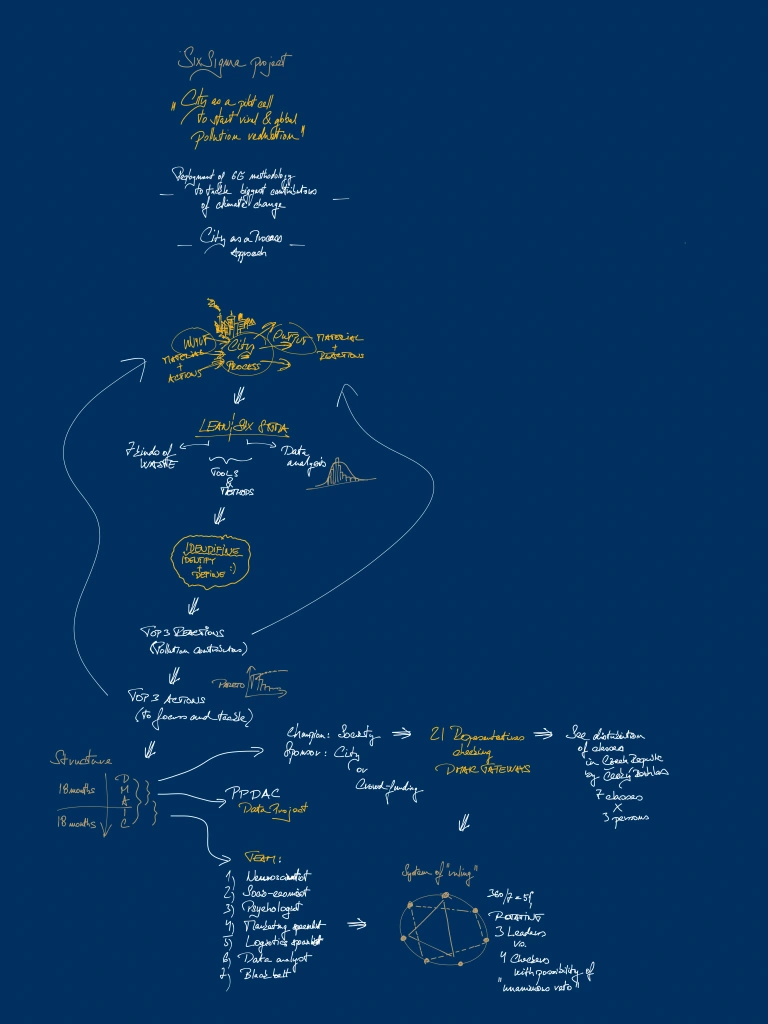
“City as a pilot cell to start viral global pollution reduction”

What if we can deploy…
“Six Sigma methodology to tackle the biggest contributors of climate change”

What if we approach…
“City as a Process”

Lean Six Sigma for a Smart and Sustainable City

To fight climate change, a bottom-up (decentralized) approach, an initiative within a smaller cell (e.g. city) can be a complementary concept to top-down (centralized) approach large-scale projects and targets, such as:
– SDGs (Sustainable Development Goals)
– EU Green Deal

A success story Lean Six Sigma project on a city scale can become viral and accelerate efforts to reach climate targets.

City as a Process for LSS Project

As an Industrial Engineer, I can’t help myself seeing a Process in everything (…or a Project, …I am lost :)).

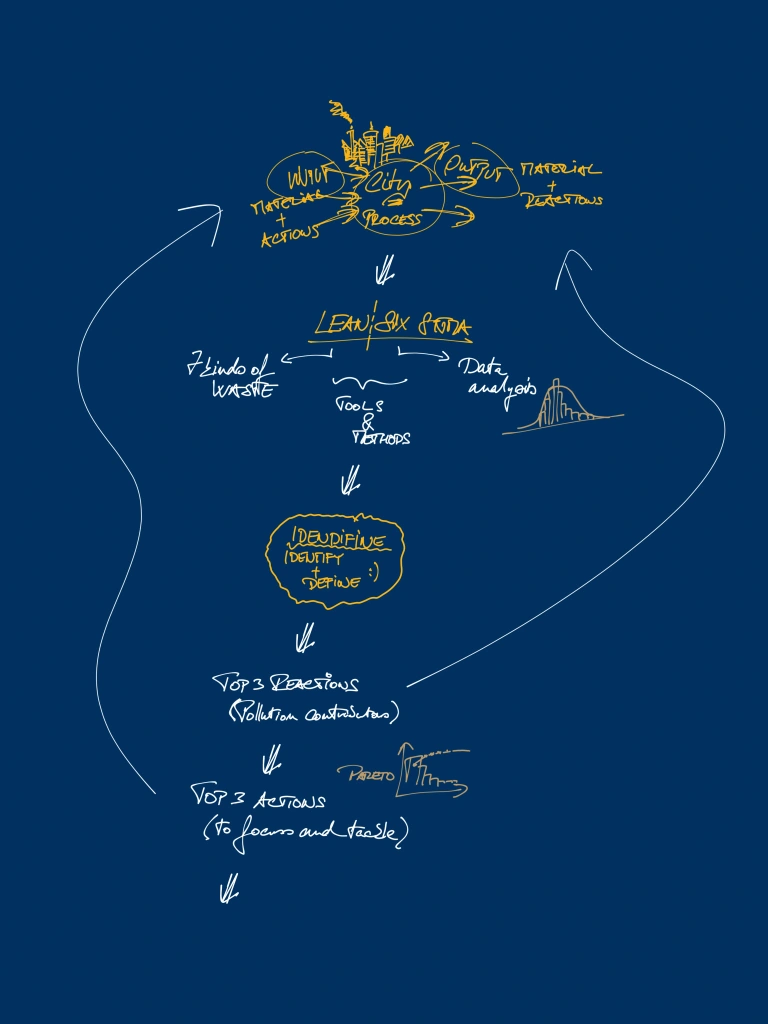
Every Process has its Inputs and Outputs. Generally, we name them many names, such as Resources, Materials, Energy, Actions, Reactions, or Information.

We can use the magnificent toolbox of:
– Lean (elimination of eight types of waste)
– Six Sigma (statistical data analysis)
to identify our core issues and define our targets.

To this day, there were already made many studies about contributors to climate change. The same is valid about the causes of these contributors and recommended steps to avoid or decrease their influence.

But here the game is different. On a city scale (bottom-up approach), these complex, global-scale studies might not be the right context for our case targets.

Therefore, on a city scale, it will be crucial to “Idendifine” (in terms of climate change, to Identify local or regional issues and to Define a scope of such project), as cities are usually not hanging in the sky, detached from its surrounding.

Lean Six Sigma methodology is also a project management tool. Keeping its framework will let us reach our targets.


DMAIC Framework for Project Management

DMAIC Framework for Project Management

In the first phase of the DMAIC structure, we are invited to Define rules of play. 
More importantly, we create teams.

1) Team that will act as a Steering Committee
2) Team that will work on the LSS Project
3) System of Ruling

Obvious note: People are the most important asset → as we do it with the people, for the people!

1) Steering Committee

Introduction to LSS roles:
– Sponsor: Taxpayers / City council (acting)
– Champion: Society / City council (acting)
– Customer: City inhabitants / City council (acting)

City representatives together with representatives of every social class will create this Steering Committee, which task will be reviewing the DMAIC gateways. Classification and distribution of social classes were well identified by research for Czech Radio.
It is important to invite everyone to the table, as such initiative will have an effect on all inhabitants and should be communicated/marketed in such a manner, to mitigate the resistance to change and fear of the unknown.

2) LSS Project Team

This is a multi-layered problem. We need a team of professionals from diverse fields.

Six Sigma Phases:

– Measurement
– Analysis
are manageable by technical experts (e.g. Data Analyst, Six Sigma Black Belt, Socio-economist, Transportation and Logistics specialist). Structure similar to Data projects can be used, see PPDAC cycle.

– Improve / Implement
– Control / Verify
to secure that improvements and their implementation will be successful, we need different kinds of specialists (e.g. Psychologist, Marketing Specialist, Communication and Community Expert)

The ones, which know, how the human brain and society works, understand the behavior of city inhabitants, and sell them the sought product (environmental improvements). 
And again, to mitigate the resistance to change and fear of the unknown. 
 

3) System of Ruling

For both teams, Project and Steering. Periodical changes of leaders vs. reviewers – rotating each 3rd week.
In a 7-member team, 3 leaders vs. 4 reviewers (with an option for unanimous veto). For an optimal team size, consider a 5-member team (3 leaders vs. 2 reviewers).

Related Posts